How to Organize Bible Journaling Supplies
Have you ever sat down to do some Bible journaling, only to spend the first ten minutes looking for that one pen, sticker, or highlighter you know you have… but just can’t find?
I know, because I’ve been there too.
It’s amazing how something that’s meant to be peaceful and refreshing can suddenly feel stressful when your supplies are scattered everywhere. A little disorganization can interrupt your focus fast. And when you finally do sit down to spend time in God’s Word, the last thing you want is to feel frazzled before you even begin.
That’s why today I want to talk about how to organize your Bible journaling supplies in a way that makes your creative time easier, more peaceful, and much more enjoyable.
Whether you’re brand new to Bible journaling or you’ve been doing it for years, having a simple system in place can save time, reduce frustration, and help you stay in that creative flow. And honestly, there’s just something so satisfying about having your favorite tools easy to reach and your space free of clutter.
Let’s walk through a few simple steps that can turn your Bible journaling area into a calm, inviting place to create.

1. Take Stock of What You Have
The first step is to gather everything together in one place.
And I do mean everything.
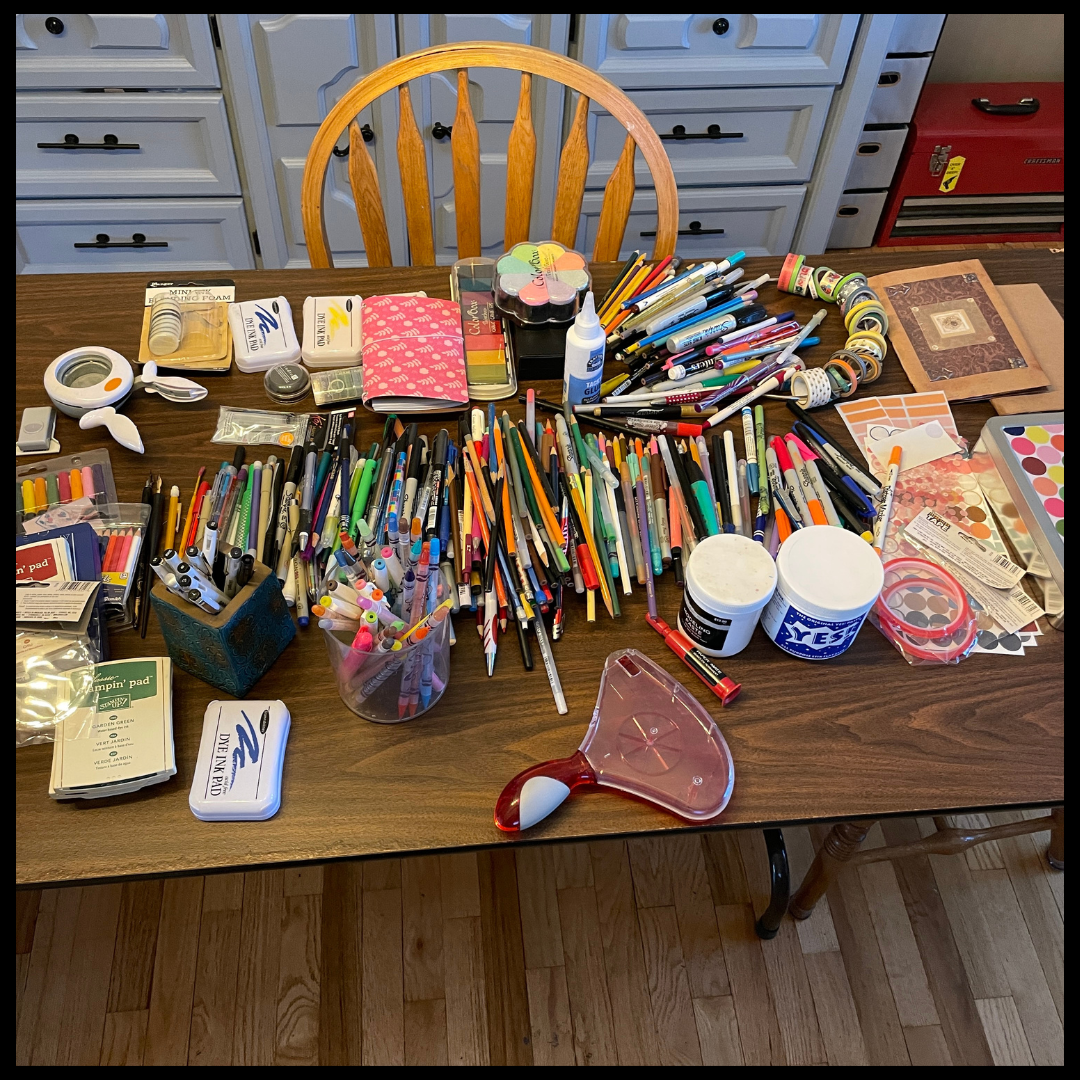
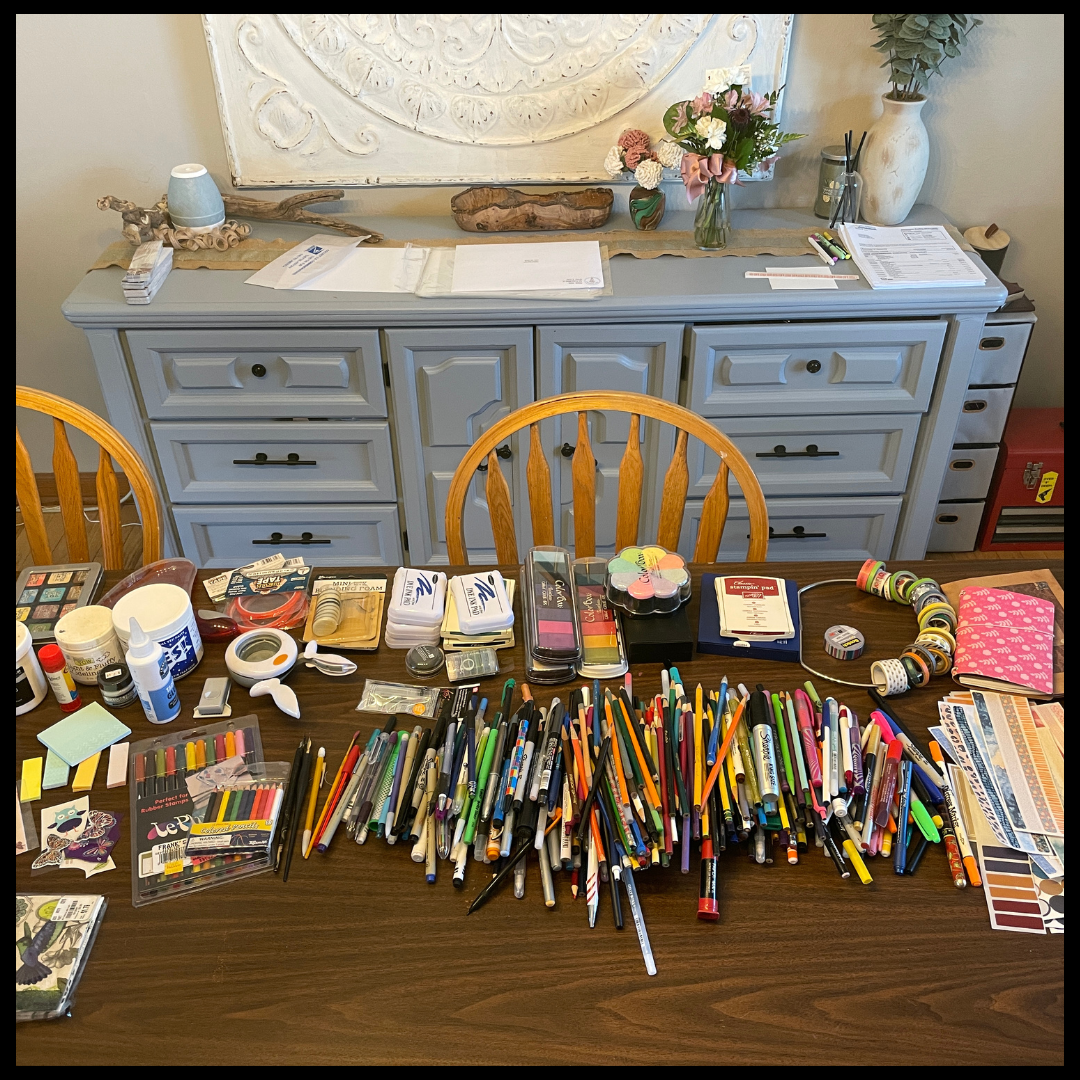
Pull out your pens, markers, stickers, washi tape, stamps, stencils, paints, highlighters—whatever you use for Bible journaling. Once it’s all sitting in front of you, you may realize you have more than you thought.
This step is helpful for more than just seeing what you own. It also gives you a chance to notice what you actually use. Maybe you have several sets of highlighters, but always reach for the same two colors. Maybe you’ve collected lots of washi tape over time, but some of the designs no longer fit your style.
That’s okay.
This is a great time to clear out what you don’t need or don’t use. Sometimes less really is more, especially when it comes to creativity. When you have fewer distractions, it becomes easier to focus on what matters.
2. Sort Your Supplies into Simple Categories
Once you’ve gathered everything, the next step is to sort it.
Group your supplies by type so they’re easier to find when you need them. Pens with pens. Stickers with stickers. Washi tape with washi tape. Keep stamps together, and paper pieces together.
The goal isn’t to create some complicated organizing system. It’s simply to make your supplies easier to use.
Think about the way you like to journal, and create categories that make sense for you. If you use certain tools together all the time, keep them together. If you tend to reach for the same small group of favorites, set those aside in a place where they’re easy to grab.
Your system doesn’t have to look like anyone else’s. It just needs to work for you.
3. Choose Storage Solutions That Fit Your Life
After everything is sorted, it’s time to decide where each category will live.
The best storage system is one that feels practical and easy to maintain. It should suit your space, your routine, and your personal style. Here are a few ideas that work especially well for Bible journaling supplies.
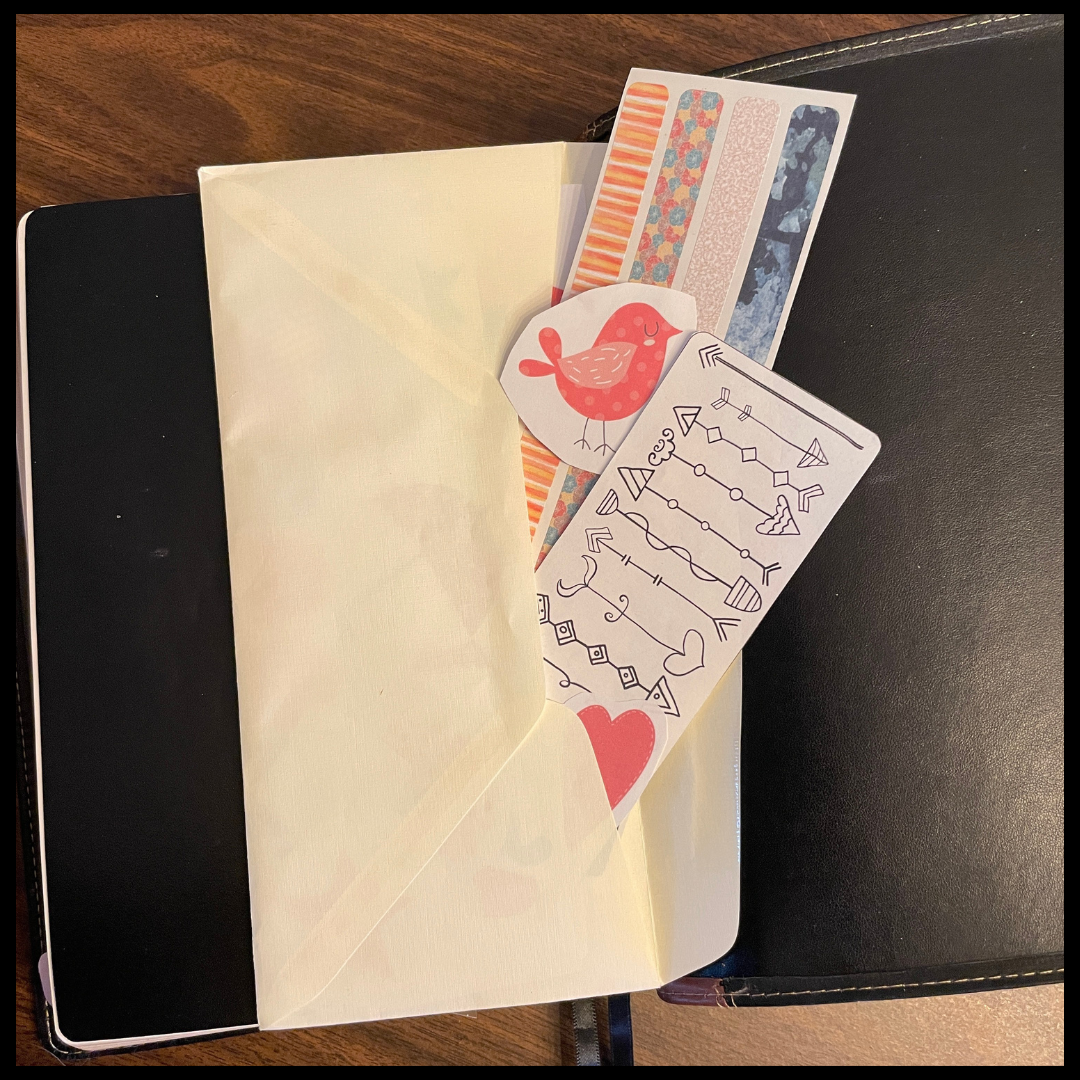
One solution that has made a big difference for me is keeping an envelope in the back of my Bible. I use it to hold all the small graphics and stickers I’ve already cut out. That way, they stay neat and easy to access instead of falling all over the place.
Clear bins or containers are another helpful option. I love these because you can see what’s inside at a glance. They work especially well for stickers, stamps, and other smaller supplies. If you want to go one step further, you can add labels so everything has a clear home.
If you have a desk or table with drawers, drawer organizers can be a great way to keep things tidy. Small trays or dividers make it easy to separate your pens, tape, glue, and paper items so they aren’t all mixed together.
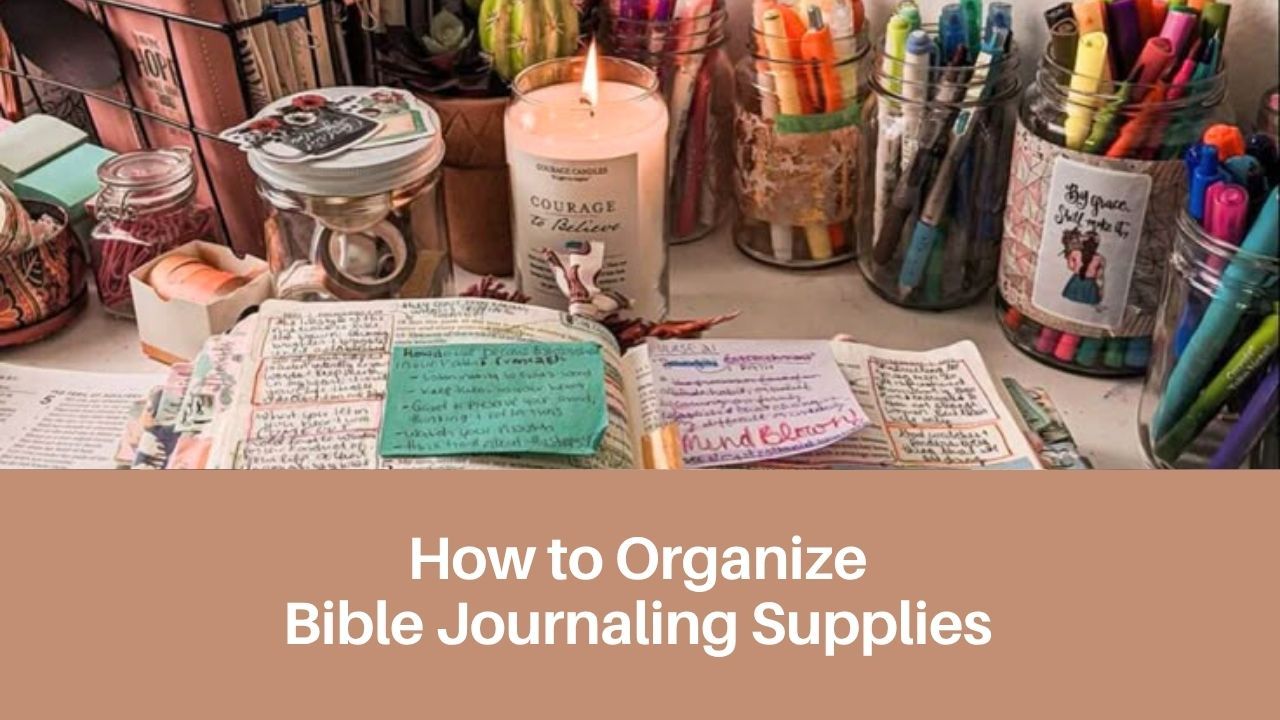
Mason jars or cups are perfect for items you use often. Pens, markers, and paintbrushes can stand upright, which makes them easy to grab during your journaling time. Keeping your most-used tools visible can make the whole process feel much more seamless. Be willing to use what you already have on hand. It doesn’t have to be fancy.
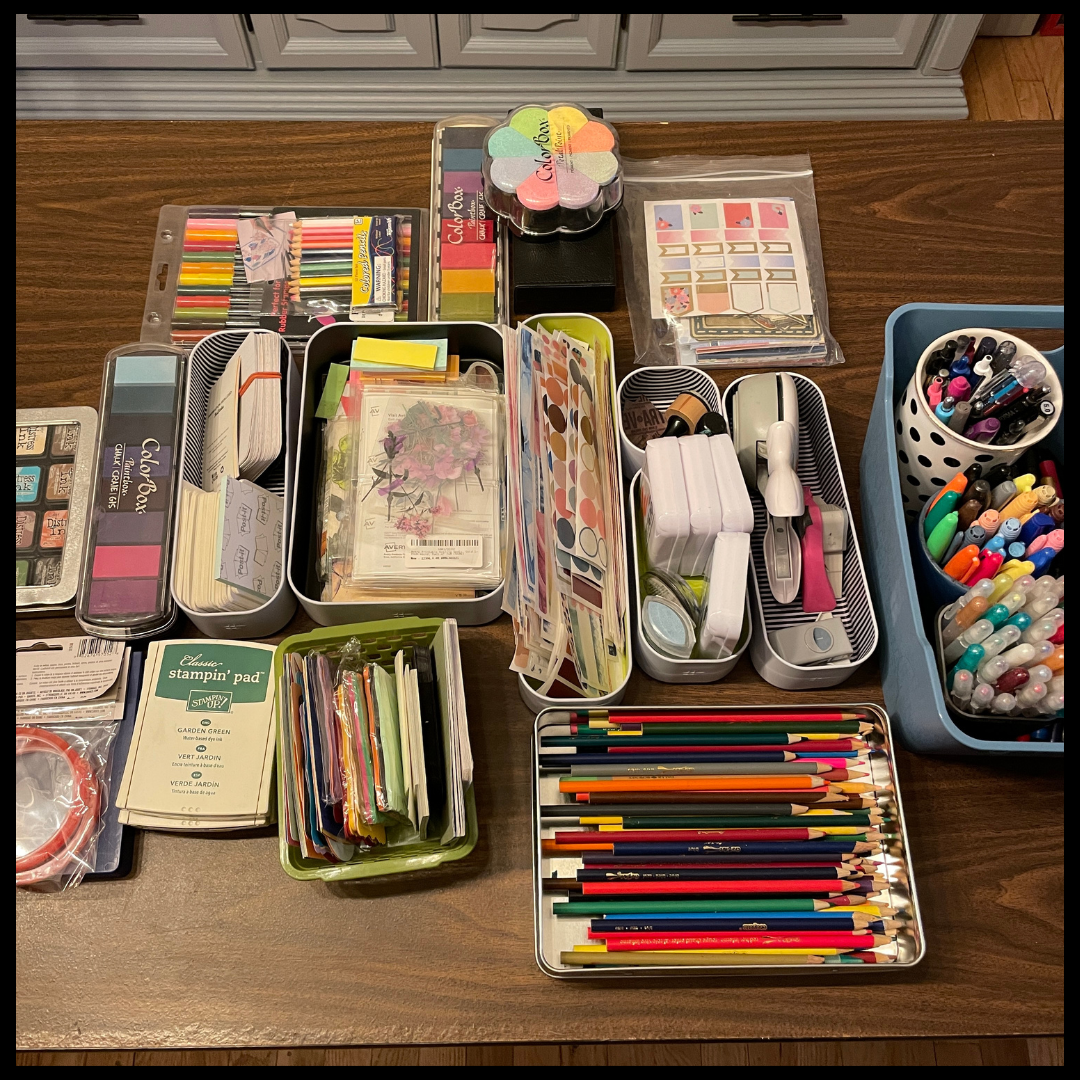
A rolling cart can be a wonderful investment if you don’t have one dedicated journaling space. If you like to journal at the table one day, on the couch the next, or even outside when the weather is nice, a rolling cart makes it easy to bring your supplies with you.
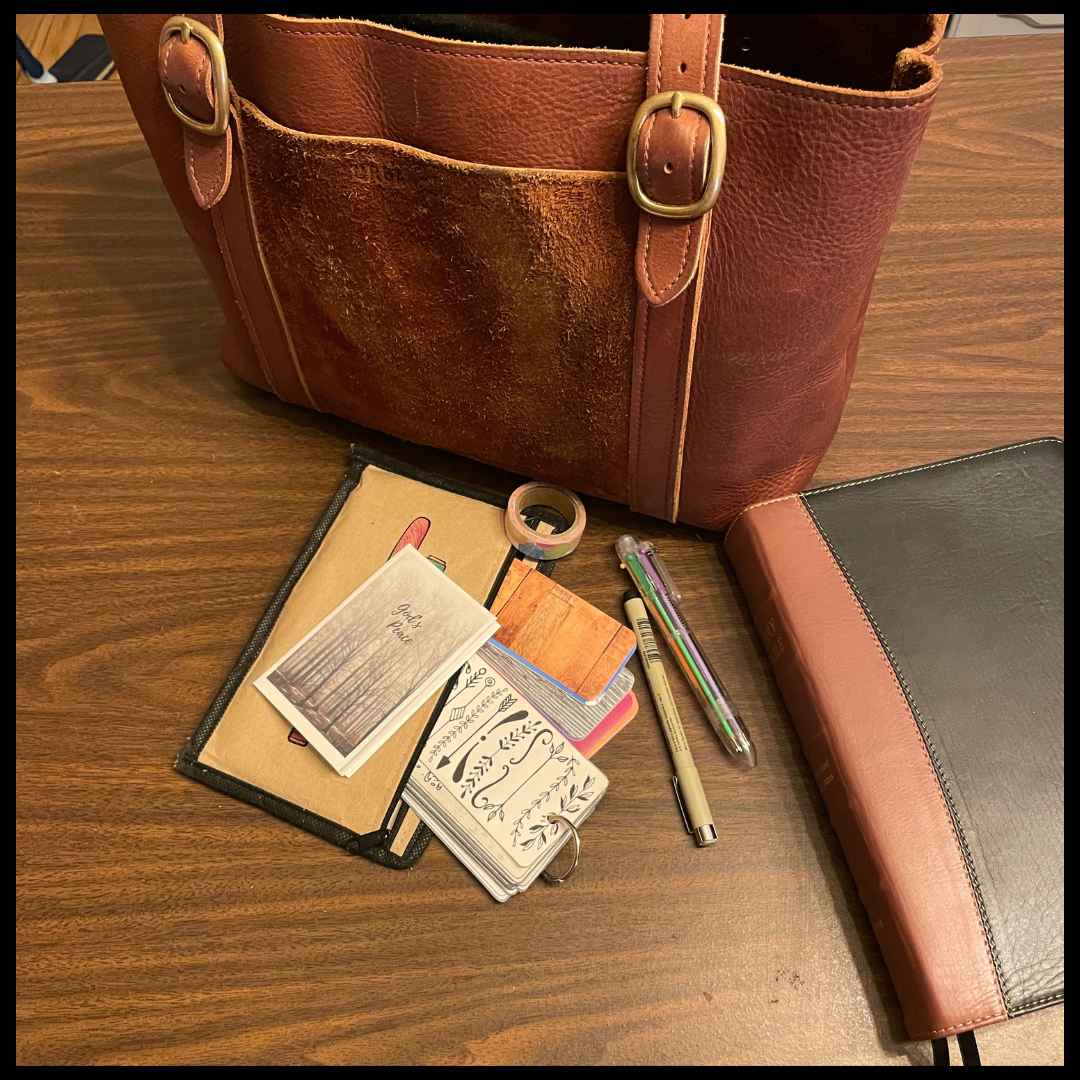
And don’t forget about a pouch or travel bag. I keep one in my church bag with just the basics I want on hand—usually a couple of pens, some highlighters, and a few story stickers. It makes it simple to have what I need without carrying everything.
Whatever storage method you choose, the important thing is this: make it easy to access your supplies and easy to put them away.
4. Keep Your Workspace Clean and Ready
One thing I’ve learned is that a cluttered space can lead to a cluttered mind.
Once you’ve put your organizing system in place, try to make it a habit to reset your space after each journaling session. It doesn’t have to take long. Just a few minutes can make a big difference.
Put your pens back in their jar. Return your stickers to their envelope or bin. Close your Bible. Put things back where they belong.
That small reset helps create a fresh start for next time.
When you sit down to journal again, you won’t have to spend time searching or rearranging. You’ll be able to begin right away, with fewer distractions and more peace. And there’s something about a clean, orderly space that makes it feel much more inviting.
5. Make Your Journaling Space Feel Personal
Organization is helpful, but don’t forget to make your space feel like you.
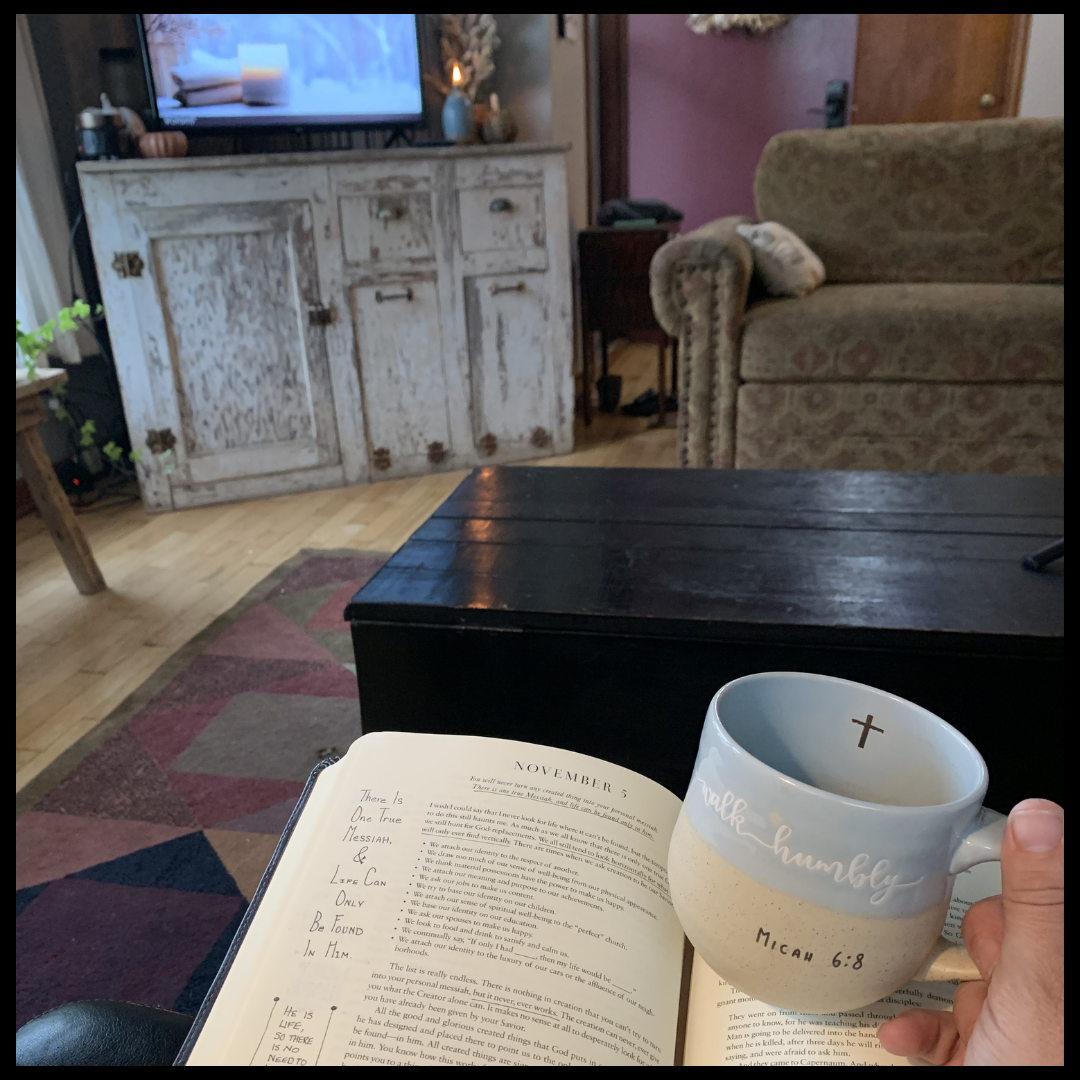
Bible journaling is personal, so it makes sense for your space to reflect that. Maybe you enjoy lighting a candle while you journal. Maybe you like soft worship music playing in the background. Maybe you want to hang a favorite Scripture verse or an encouraging quote near your desk.
Those little details can make your journaling time feel even more meaningful.
You don’t need a picture-perfect craft room. You just need a space that feels peaceful, welcoming, and supportive of the time you’re spending with the Lord.
6. Give Yourself Permission to Adjust as You Go
It’s also important to remember that organizing is not a one-time task.
As you continue Bible journaling, your supply collection may grow. Your preferences may change. You may discover that something you thought would work really well actually doesn’t fit your routine.
That’s normal.
Give yourself permission to tweak your system until you find what works best. You’re not trying to build a perfect setup. You’re building a space that supports your quiet time and helps you stay focused on God’s Word.
The Real Goal of Organizing
At the end of the day, Bible journaling is about connecting with Scripture in a creative and personal way.
Organizing your supplies is not about having a Pinterest-perfect setup. It’s about making the process easier, more enjoyable, and less stressful. When your tools are in order, your mind is freer to focus on what really matters—reflecting on God’s Word and deepening your relationship with Him.
A simple system can make a big difference.
And when your space feels peaceful, it becomes that much easier to sit down, open your Bible, and begin.
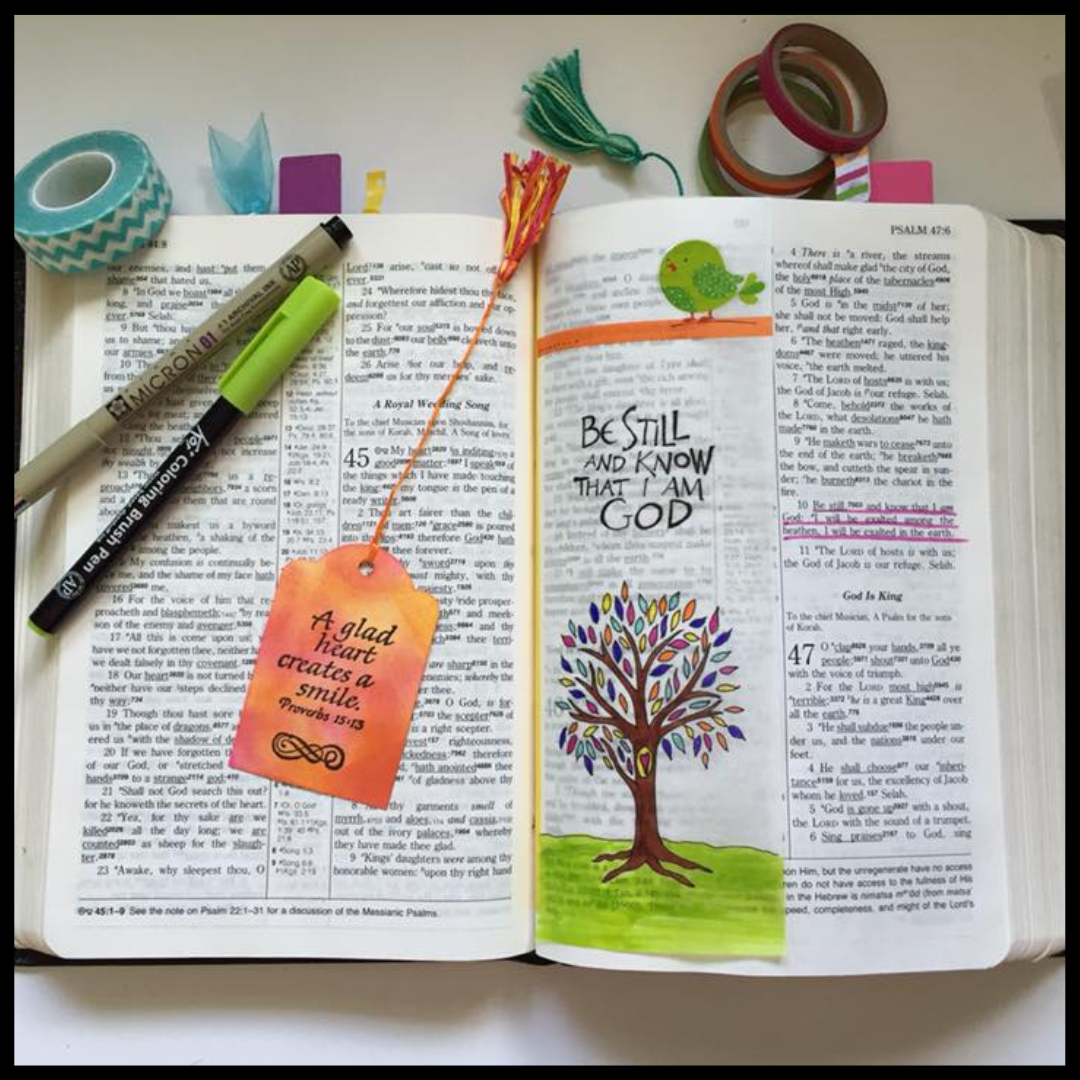
Ready to Get Started?
If you’d like to learn how to get started with Bible journaling, I’d love to invite you to join my free Bible journaling workshop. It’s a great place to begin, especially if you’re feeling unsure about where to start.