How to Bible Journal the Easter Story (Even If You Can’t Draw)
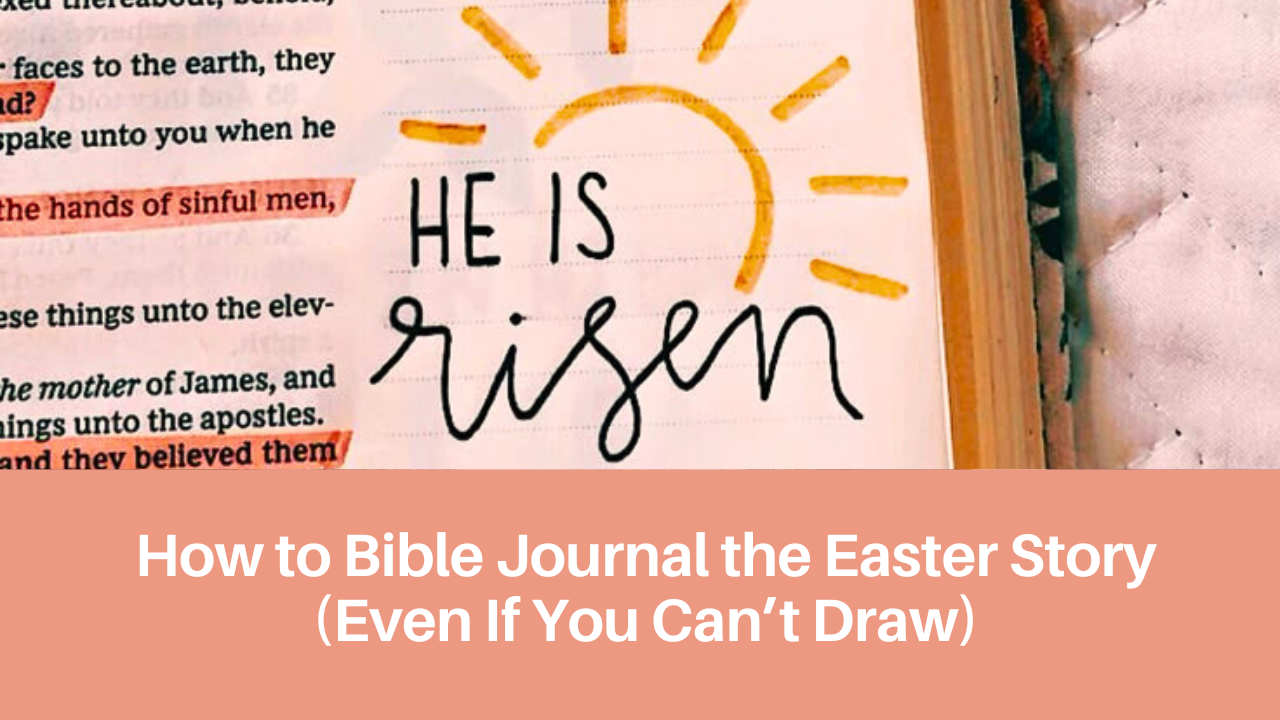
If you’ve ever opened your Bible during Easter week and thought, “I want to do something meaningful with this… but I can’t draw,” I just want to say: you are exactly the kind of woman I write for.
Because Bible journaling was never meant to be an art class.
It’s a way to slow down long enough to notice what God is saying… and then capture it so you remember it later. And you can absolutely do that without sketching a single flower, banner, or fancy lettering style.
Today I’m going to show you a handful of simple techniques you can use to Bible journal the Easter story. These are quick, beginner-friendly, and they’ll give you a fast “I actually did it!” win—so you feel confident the next time you open your Bible.
Let’s do this together.
First: Pick one Easter passage (don’t overthink it)
You don’t need to journal the whole week’s readings all at once. Choose one of these:
-
Jesus’ triumphal entry: Matthew 21:1–11
-
The Last Supper: Luke 22:14–20
-
The cross: Luke 23:32–49
-
The resurrection: John 20:1–18
If you want the quickest win, choose John 20:1–18. It’s emotional, personal, and it includes one of my favorite details: Jesus speaks Mary’s name. That moment alone can carry a whole journaling entry.
Your 5-minute “quick win” Easter journaling page
Here’s a simple plan you can do today:
-
Read the passage
-
Underline one sentence that stands out
-
Write one short response to Jesus in the margin
That’s Bible journaling.
If you do only that, you’ve already created something meaningful and memorable.
Now… if you want to make it a little prettier (still without drawing), try one of the easy techniques below.
6 simple techniques to Bible journal the Easter story (no drawing required)
1) The “Big Word” Page (my favorite beginner win)
Pick one word from the passage that captures the moment.
Some Easter words that work beautifully:
risen, alive, finished, hope, peace, forgiven, victory, remember, beloved
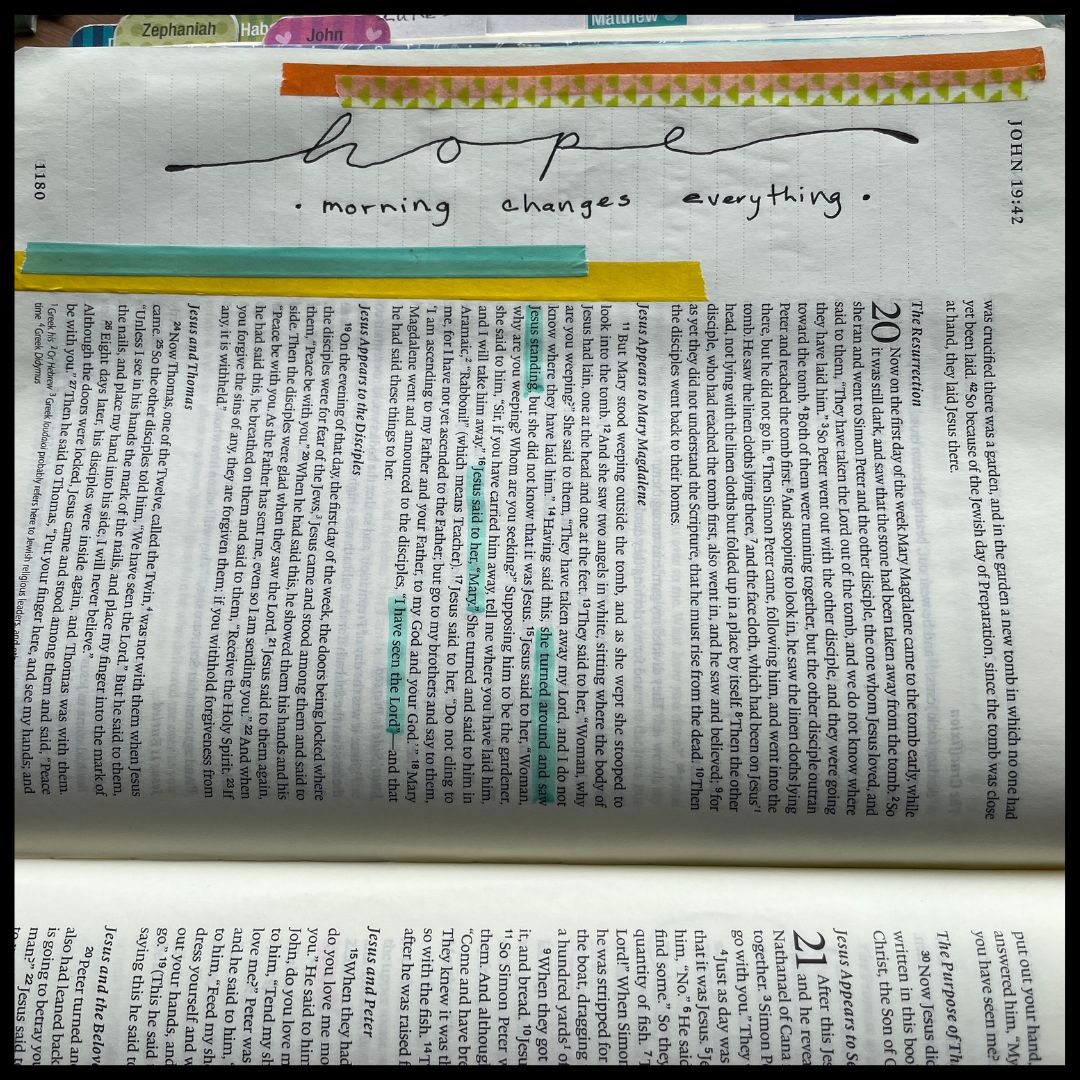
Write that word big in the margin or on a journaling card. Then add one short sentence underneath.
Example (John 20):
Big word: HOPE
Sentence: “Morning Changed Everything.”
Or "PEACE "Jesus came and stood among them"
If you have a sticker or piece of washi tape, place it behind the word like a little highlight. It's simple and adds a touch of color.
2) The “Underline + Caption” Technique
This one is so simple and works good even if you don't have a journaling Bible with wide margins.
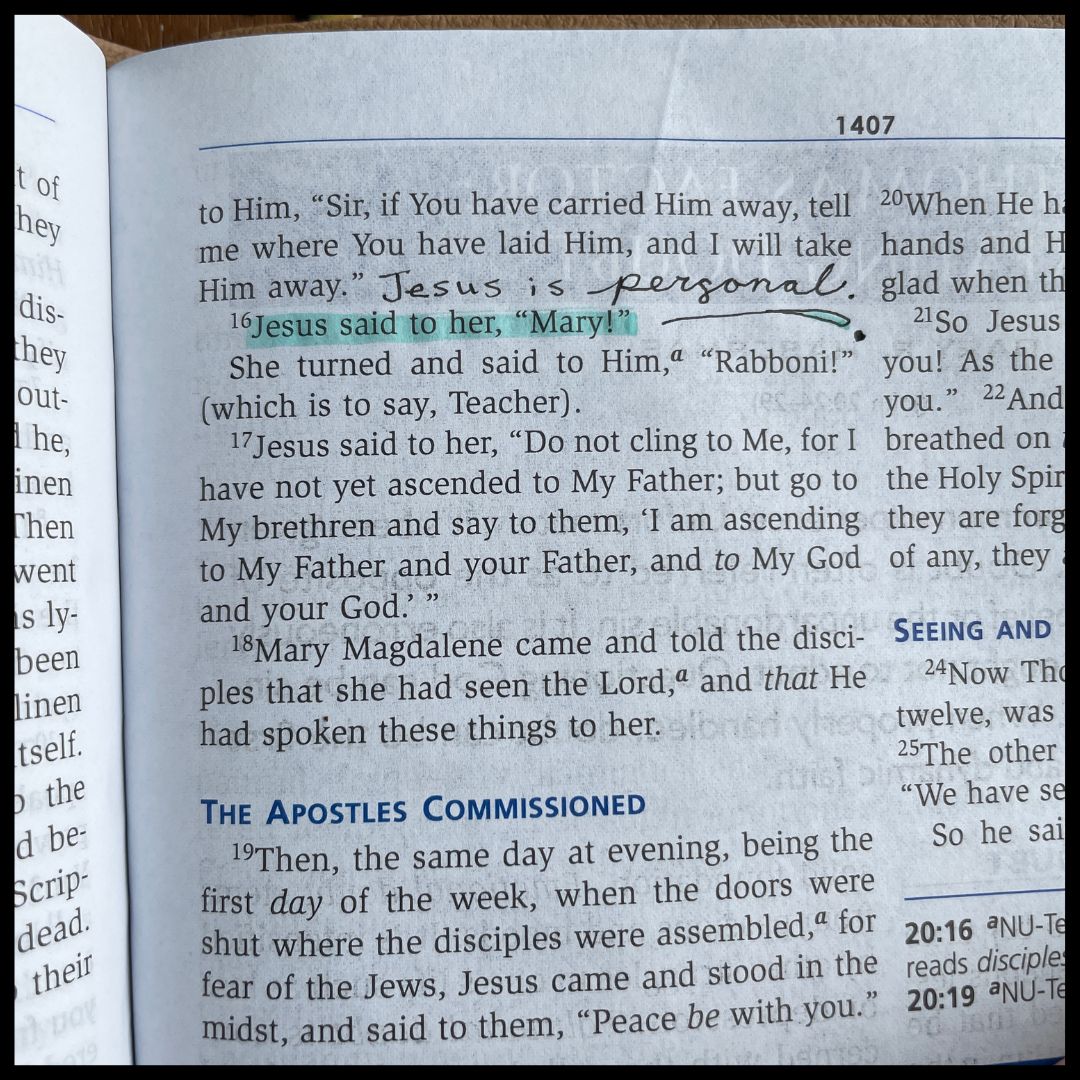
Underline one sentence, then write a tiny caption like you’re posting it on a photo.
Example (Luke 23):
Underline: “Father, forgive them…”
Caption: “Forgiveness is who He is.”
Example (John 20):
Underline: “Mary.”
Caption: “Jesus is personal.”
That’s it. No drawing—just clarity.
3) The “Three Words I Needed Today” List
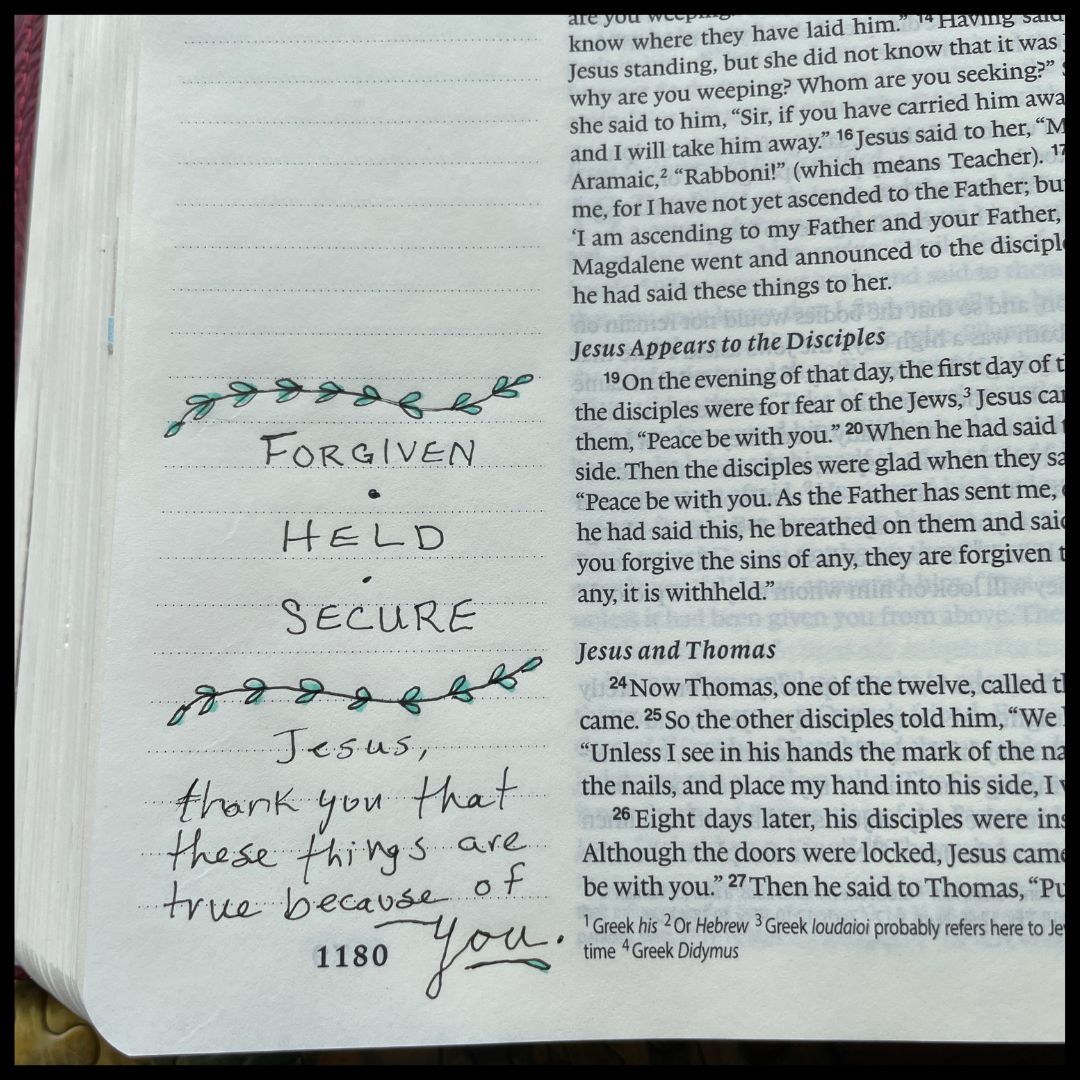
This is perfect if you’re not sure what to write, or if your mind is busy.
After you read, write three words you needed from the passage.
Examples:
-
“Loved. Seen. Saved.”
-
“Forgiven. Held. Secure.”
-
“Finished. Free. Alive.”
Then add one sentence:
“Jesus, thank You that this is true because of You.”
This works with any Easter passage and takes about 60 seconds.
4) The “Promise / My Response” Box
Draw one simple rectangle. (That’s not drawing—that’s a box. 😉)
Label it:
"Promise:
My response:"
Now write one truth from the passage and one honest response.
Example (Good Friday):
Promise: “Jesus paid it all.”
My response: “I can stop trying to earn what You already gave.”
This gives structure, and structure makes journaling easier.
5) The “Tip-In” Quick Win
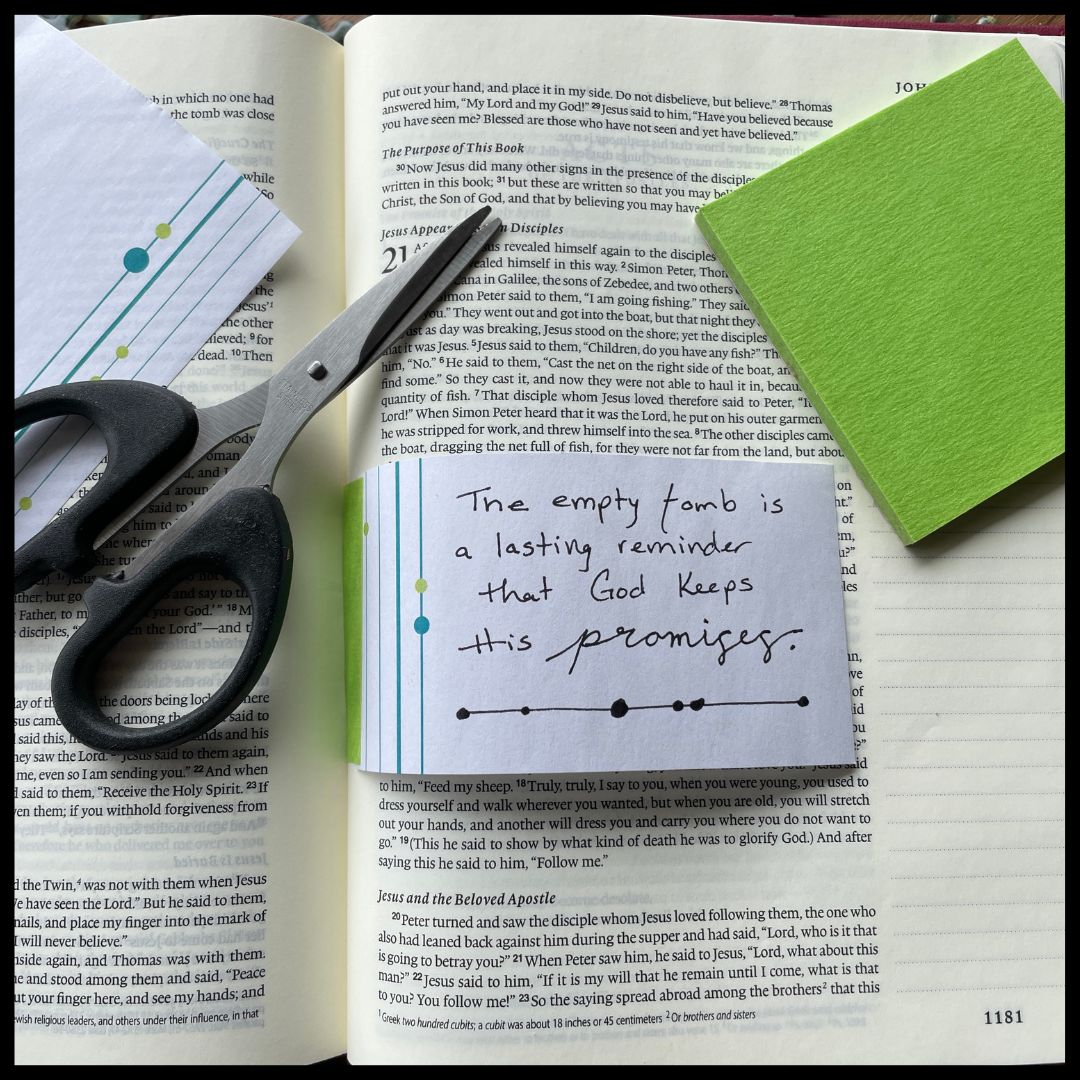
If you want an entry that feels special but still simple, add a tip-in (a little flap).
All you do is tape a small piece of paper into the inner margin so it gives you a place to write. You can use the sticky part of a post it note to stick the paper into the valley of your page.
Prompt idea:
“Jesus, because You are risen, I can trust You with ________.”
This is one of the easiest ways to create a meaningful keepsake page.
6) The “Sticker Frame” Technique (for instant polish)
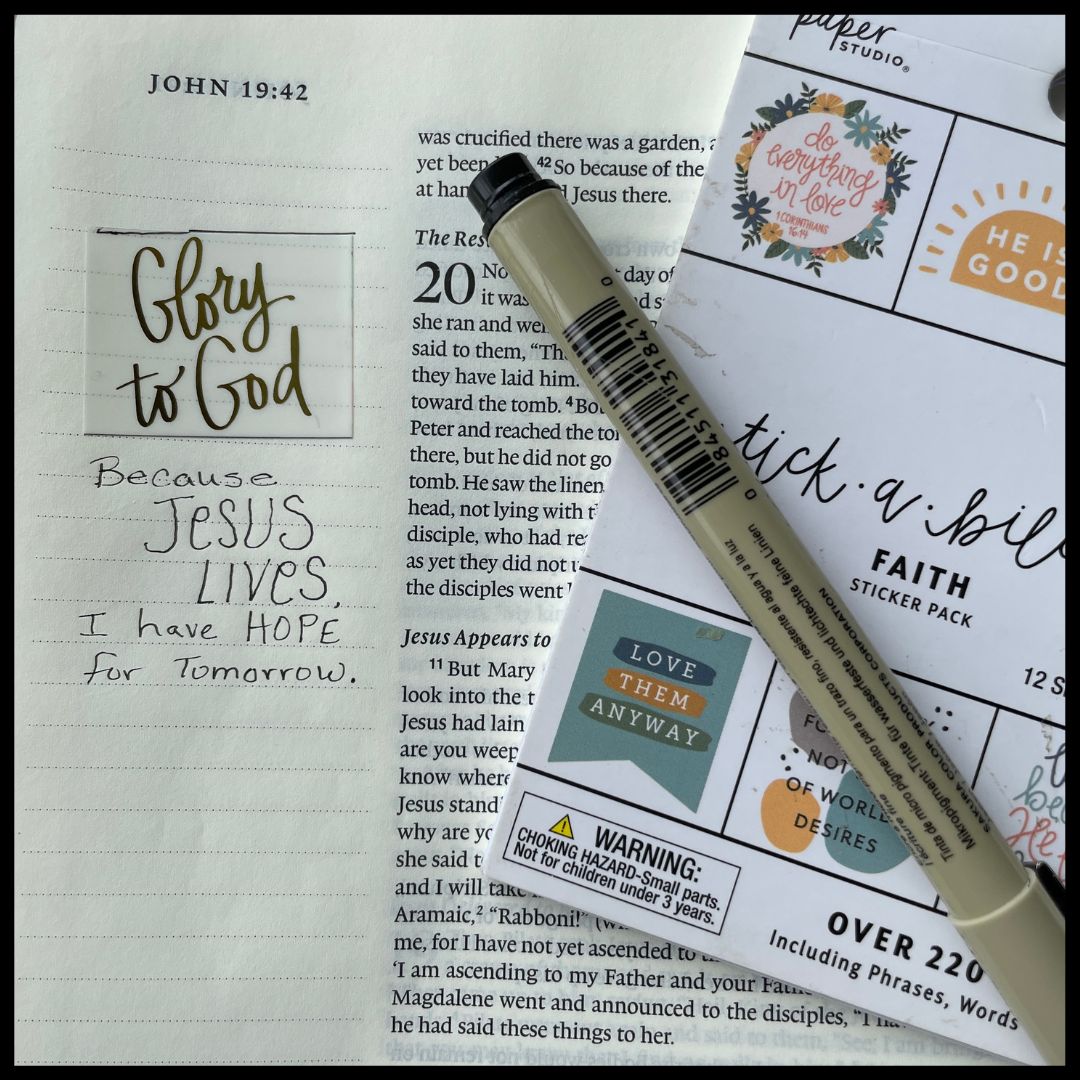
If you have even one sticker (or a pretty piece of paper), you can use it.
-
Place the sticker in the margin or at the bottom corner of the page
-
Write the scripture reference next to it
-
Add one sentence:
“Because Jesus lives, I have hope today.”
This is especially great for women who love the idea of Bible journaling but freeze up because they think it has to be complicated.
It doesn’t.
If you're looking for great Bible journaling stickers and supplies, you can find them in my Amazon Shop.

Want me to give you a “copy this page” Easter layout?
Here are 3 ready-to-use Easter page layouts you can copy exactly:
Layout 1: Resurrection (John 20:1–18)
-
Big word: ALIVE
-
Underline: “Mary.”
-
Sentence: “Jesus, You see me and You call me by name.”
Layout 2: Good Friday (Luke 23:32–49)
-
Big words: IT IS FINISHED
-
Sentence: “So my striving can be finished too.”
-
Add: Promise/My Response box
Layout 3: Last Supper (Luke 22:14–20)
-
Underline: “given for you”
-
Caption: “He didn’t hold back.”
-
3 words list: “Remember. Receive. Rest.”
Pick one and do it today. Quick win.
The point isn’t to make pretty art. The point is remembering what God says to you personally.
If you’re new to Bible journaling, I want to free you from the pressure to “make it look like Pinterest.”
You’re not trying to impress anyone.
You’re making space to meet with Jesus—and you’re creating a page you’ll look back on later and remember, “This is what God showed me.”
And Easter is the most beautiful place to start.
Want to learn Bible journaling step-by-step with me?
If you’d like a simple, beginner-friendly way to get started (especially if you can’t draw), I have a free workshop that walks you through it and includes a printable workbook so you can follow along.
https://www.reginayoder.com/evergreen-workshop-opt-in
If you try one of these Easter techniques, I’d love to see it. Even if it’s just underlining one verse and writing one sentence—that counts. Those “small” pages are often the ones God uses in a big way. If you're not already a part of my Everyday Faith Facebook group, join us. It's a great place to get more ideas.